Automotive industry
Global industry designing, manufacturing, and selling motor vehicles.

Internet Archive Book Images · No restrictions
The automotive industry comprises a wide range of companies and organisations involved in the design, development, manufacturing, marketing, selling, repairing, and modification of motor vehicles. It is one of the world's largest industries by revenue, with the global automotive market at approximately $2.75 trillion in 2025.
- field
- Automotive industry
- global_market_value_2025
- ~$2.75 trillion
- origin_of_word
- Greek autos (self) and Latin motivus (of motion)
- largest_producer_2024
- China (over 31 million vehicles)
- global_automobiles_in_use_1929
- 32,028,500
Lore & Background
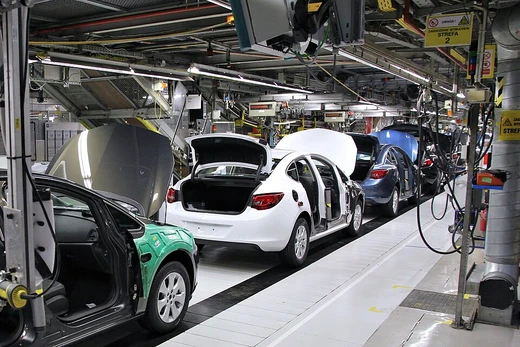
The automotive industry began in the 1860s with hundreds of manufacturers pioneering the horseless carriage. Early car manufacturing involved manual assembly by a human worker, evolving from engineers working on a stationary car to a conveyor belt system. In the 1960s, robotic equipment was introduced, and most cars are now mainly assembled by automated machinery. For many decades, the United States led the world in total automobile production, with the U.S. Big Three—General Motors, Ford Motor Company, and Chrysler—being the world's three largest auto manufacturers for a time. In 1929, the world had 32,028,500 automobiles in use, of which U.S. enterprises produced about 84% of global production. After 1945, the U.S. briefly produced around three-quarters of the world's auto production, but its share dropped significantly by the 1960s. Japan overtook the U.S. in 1980 and remained the world's largest producer until 2008. In 2009, China took the top spot from Japan with 13.79 million units. In 2024, China produced more than 31 million vehicles, after breaking 30 million in 2023. China produced the most passenger cars in 2024, with Japan, India, Germany, and South Korea trailing. This growth was driven by a combination of joint ventures with foreign manufacturers, the rise of domestic brands, supportive government policies, and a robust supply chain.
Reader's Guide
The automotive industry is a cornerstone of the global economy, with a market value of about $2.75 trillion in 2025. Its history reflects a shift from manual assembly to automation, with robotic equipment introduced in the 1960s. Production leadership has shifted over time: the United States dominated for decades, then Japan overtook it in 1980, and China became the top producer in 2009, producing over 31 million vehicles in 2024. Safety is highly regulated, with standards like ISO 26262 for functional safety, and product recalls are a significant concern due to financial consequences. The industry faces environmental challenges, including high water consumption—some estimates surpass 180,000 liters per car—and regulatory shifts toward zero-emission vehicles, such as the European Commission's 2021 'Fit for 55' package requiring all new cars in Europe to be zero-emission from 2035. Emerging markets, particularly BRIC countries, have grown in importance, though reports in 2012 indicated a slowdown even there. The industry's expansion has led to specialized academic programs, such as Northwood University's automotive marketing curriculum and its annual student-run auto show.
Did You Know?
- In 1929, the world had 32,028,500 automobiles in use, with U.S. enterprises producing about 84% of global production that year.
- China produced more than 31 million vehicles in 2024, the highest of any country.
- The standard ISO 26262 is considered one of the best practice frameworks for achieving automotive functional safety.
From Horseless Carriages to Robotic Assembly
The word "automotive" fuses the Greek root meaning "self" with the Latin root meaning "of motion," a pairing Elmer Sperry proposed in 1898 to label these self-powered machines. The industry itself dates to the 1860s, when hundreds of small workshops were tinkering with what contemporaries called horseless carriages. In those earliest days, a single human worker would hand-assemble an entire vehicle from scratch. The process gradually evolved: engineers first labored over a stationary car, then the vehicle began travelling along a conveyor belt past stations staffed by increasingly specialised workers. By the 1960s, robotic equipment entered the factory floor, and today the overwhelming majority of cars are put together by automated machinery rather than human hands. That arc—from one person building a whole car to vast fleets of robots handling assembly—stands as one of the most sweeping industrial transformations of the modern era, reshaping not just how vehicles are made but the entire labour landscape around them.
The Great Production Relay Across Nations
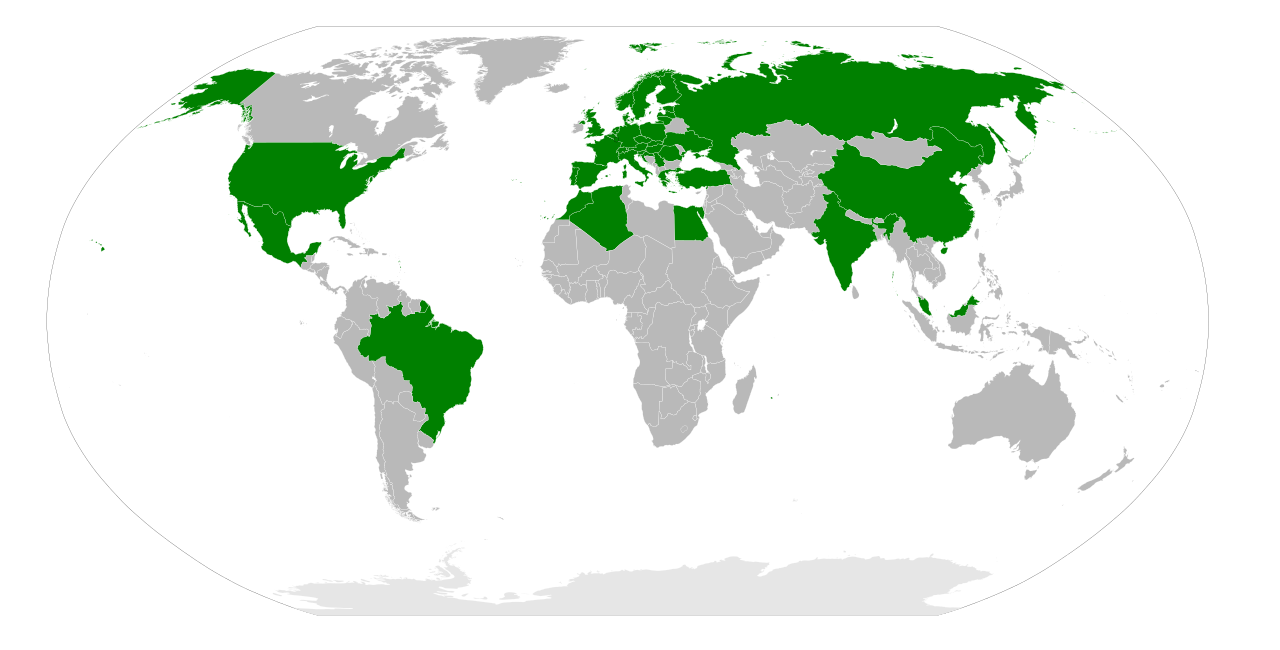
For much of the twentieth century, the United States dominated global automobile output. In 1929, before the Great Depression struck, American enterprises produced over ninety percent of the world's 32 million vehicles in use, giving the country roughly one car for every 4.87 people. After World War II, the U.S. still accounted for about three-quarters of global production. Japan overtook America in 1980, though the U.S. reclaimed the lead in 1994. Japan narrowly edged ahead again in 2006 and 2007, but the real seismic shift arrived in 2009, when China seized the top production spot from Japan with 13.8 million units. By 2024, China was manufacturing more than 31 million vehicles in a single year, a milestone it first crossed 29 million in 2017. This leap was powered in large part by Chinese firms forming joint ventures with foreign brands. Meanwhile, the variety of models available in the U.S. grew from 140 in 1970 to 684 by 2012, and as of 2026, China introduces 542 new road-legal production models every six months.
Safety, Regulation, and the Price of Failure
In the automotive world, safety carries a precise and heavily regulated meaning: no user, operator, or manufacturer should face risk from the vehicle or its components, and the vehicle itself must be shielded from damage. Because the stakes are so high, vehicles must satisfy a web of local and international regulations before they can reach the market. The ISO 26262 standard is widely regarded as a best-practice framework for achieving functional safety in cars. When a defect, dangerous condition, or faulty manufacturing procedure is identified, the maker can issue a product recall—returning a specific batch or even an entire production run. Recalls can stem from production errors or from problems in raw materials. To prevent these costly events, manufacturers run product and operational tests and inspections at multiple points along the value chain, verifying both end-user security and compliance with industry requirements. Despite these layers of scrutiny, recalls remain a persistent concern because they carry substantial financial consequences for the companies involved.
Shifting Markets and the Zero-Emission Horizon
The economic center of gravity for automobiles has been migrating. In 2007, roughly 806 million cars and light trucks were on the road worldwide, consuming over 980 billion litres of fuel annually. A Boston Consulting Group projection suggested that by 2014, a third of global demand would come from the BRIC markets. J.D. Power confirmed that emerging markets already held 51 percent of global light-vehicle sales by 2010, though later reports showed growth slowing even in those regions. In the U.S., vehicle sales peaked at 17.8 million units in 2000. Younger, urbanised consumers in developed nations are increasingly opting out of car ownership in favour of other transport modes. Looking ahead, the European Commission's "Fit for 55" package mandates that all new cars sold in Europe be zero-emission from 2035. Governments of 24 developed nations and manufacturers including GM, Ford, Volvo, BYD, Jaguar Land Rover, and Mercedes-Benz pledged to reach zero-emission new-car sales globally by 2040, or by 2035 in leading markets—though the U.S., Germany, China, Japan, South Korea, and several major brands did not sign on.
Gallery


Frequently Asked Questions
What does the automotive industry actually cover?
It encompasses every organization involved in creating, building, promoting, selling, maintaining, and customizing motor vehicles. The sector spans from initial design phases all the way through aftermarket modifications.
How large is the global automotive market?
As of 2025, the worldwide automotive market stands at roughly $2.75 trillion in revenue. That scale makes it one of the biggest economic sectors on the planet.
Which country leads in vehicle production?
China held the top spot in 2024, manufacturing more than 31 million vehicles. No other nation comes close to that output volume.
How many cars were on the road back in 1929?
By 1929, there were approximately 32 million automobiles in use worldwide. That figure gives a sense of how far the industry has grown since its early decades.
More in Automotive Industry 1-22
Spotted an error? Know more?
This is a living reference — every entry is fact-audited, and reader corrections feed straight into our audit queue. Suggest an edit · See this site's audit record