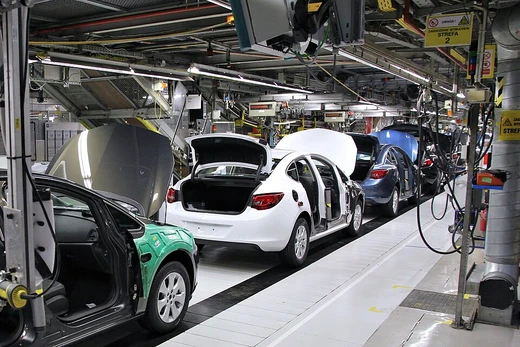
Volkswagen
German automobile brand revived after WWII.

Niranjan Arminius · CC BY-SA 4.0
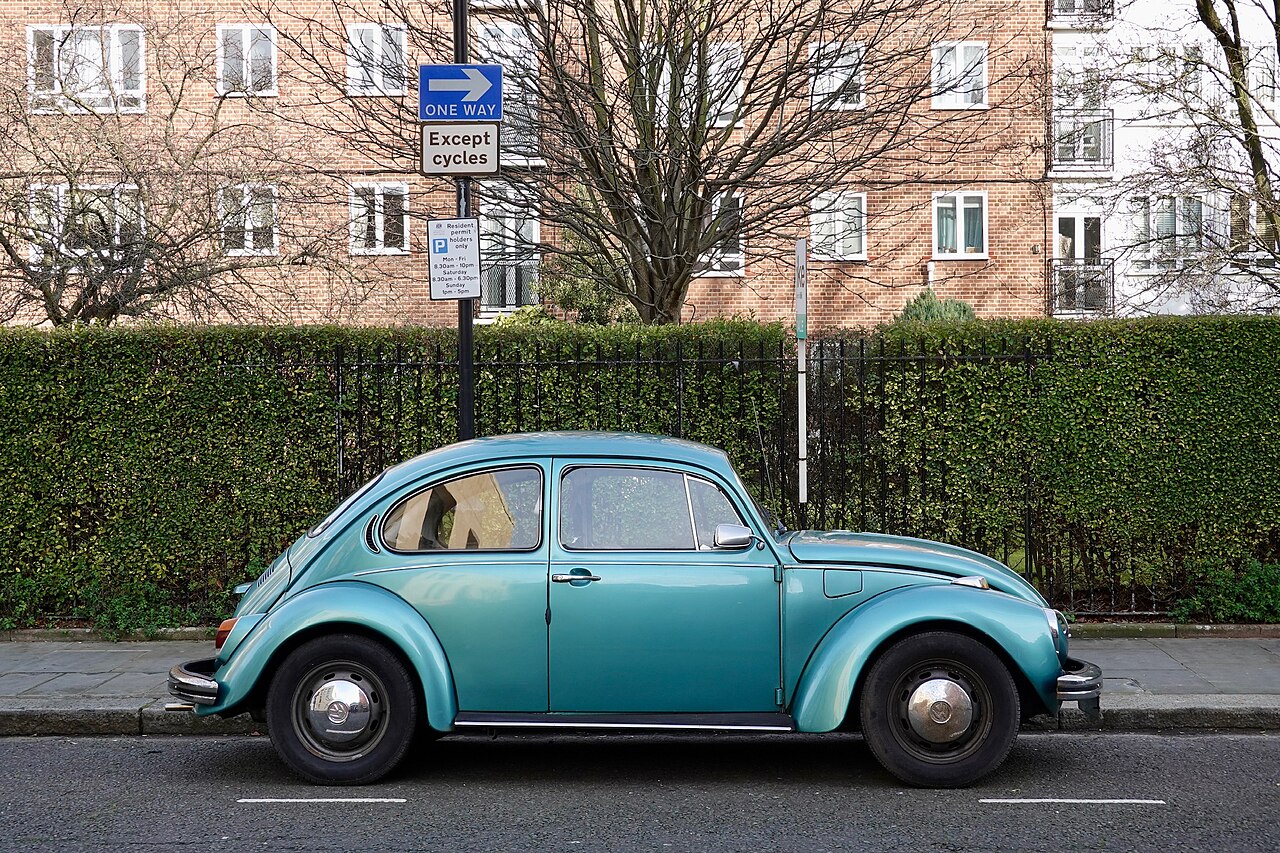
Volkswagen (German pronunciation: [ˈfɔlksˌvaːɡŋ̍]), commonly abbreviated to VW, is a German automobile brand based in Wolfsburg, Lower Saxony, Germany. The brand is well known for the Beetle and serves as the flagship brand of the Volkswagen Group, which was the world's largest automotive manufacturer by global sales in 2016 and 2017.
- field
- Automotive manufacturing
- nationality
- German
- known_for
- Beetle, flagship brand of Volkswagen Group
- market_cap_2025
- US$58.9 billion
Lore & Background
The name derives from German words meaning 'people's car'. Ferdinand Porsche designed a car with an air-cooled rear engine, torsion bar suspension, and a beetle shape, which became the KdF-Wagen. During World War II, production shifted to military vehicles, and slave labour was used at the plant. The Beetle became iconic, and the company grew into a global brand.
Reader's Guide
Volkswagen's significance lies in its origin as a state-sponsored 'people's car' project under Nazi Germany, its revival after WWII under British control, and its evolution into a global automotive giant. The Beetle became one of the most recognizable cars in history. The brand's history includes the use of slave labour during the war, which led to later restitution efforts. As of 2025, Volkswagen had a market capitalization of approximately US$58.9 billion. Its legacy includes being the flagship brand of the Volkswagen Group, which was the world's largest automotive manufacturer by sales in 2016 and 2017. The company's post-war recovery and growth exemplify industrial resilience, while its wartime past remains a subject of historical scrutiny.
Did You Know?
- The name Volkswagen means 'people's car' in German.
- The Beetle was one of the first cars designed with the aid of a wind tunnel.
Roots in Reform-Era China
Volkswagen's story in China stretches back to 1978, when the German automaker first began exploring connections with the People's Republic. That early curiosity matured into a landmark deal in 1984, when Volkswagen signed a 25-year contract to manufacture passenger cars in Shanghai. Because Chinese regulations at the time capped foreign ownership at 50 percent, the resulting joint venture—Shanghai Volkswagen Automotive Co., Ltd.—reflected that structural limit. The venture, headquartered in Anting on Shanghai's northwest outskirts, became the first car-making joint venture since China's reform and opening-up era. Parallel to this, Audi's entry into Chinese production was negotiated over a full year before agreements on the Audi 100 were signed in August 1988. The deal included technology transfer, after-sales planning, and a commitment to train roughly 500 Chinese workers at Audi facilities in Germany, while around 30 Audi employees were posted to Changchun for hands-on production support. The second major joint venture, FAW-Volkswagen, was formally established in Changchun in February 1991, becoming the first large-scale, modern automotive manufacturing base in China.
Building a Manufacturing Giant
By the 2020s, Volkswagen Group China had grown into the most established and commercially successful foreign automaker in China's automotive sector, a leading position it held for more than 25 years. The operation spans 16 representative companies across the country, handling everything from whole-vehicle production and parts delivery to engine and transmission systems, imported car sales, and after-market service. In 2025, the group sold approximately 2.6 million vehicles in the Chinese market, and China accounted for roughly 30 percent of Volkswagen's total global sales in 2024, making it the brand's second-largest market worldwide. The sheer scale of output is striking. By October 2009, SAIC Volkswagen had already produced a cumulative five million vehicles, the biggest single-manufacturer fleet in the Chinese market at that point. FAW-Volkswagen, meanwhile, reached a production rhythm of thousands of vehicles per day, manufacturing ten distinct models across the Volkswagen Passenger Cars and Audi brands. The two major Chinese partners—SAIC Motor and First Automotive Works—anchor a network that also includes Bentley, Lamborghini, and Škoda under the broader group umbrella.
A Multi-Brand Portfolio Takes Shape
Volkswagen's Chinese presence evolved from a single-brand operation into a rich multi-brand portfolio over the decades. Škoda officially joined the Shanghai Volkswagen lineup in April 2005, ushering in a dual-brand era. The first Chinese-manufactured Škoda, the Octavia, hit the market in June 2007, followed by the Fabia in 2008 and the Superb in 2009. At SAIC Volkswagen, the combined Volkswagen and Škoda offering eventually grew to twelve model series. On the premium front, Audi had been producing cars in China since the late 1980s, making it the first global premium brand to achieve domestic production in the country. In 2021, SAIC-Volkswagen added Audi to its own production roster, launching the Audi A7L as the first model, with ambitions to sell 250,000 to 300,000 units annually by 2025. FAW-Volkswagen's Audi division had already set a target of two million China-made Audi cars sold by 2020, having reached 777,000 by the end of 2017. The broader group also markets Bentley and Lamborghini vehicles in China, completing a portfolio that spans entry-level to ultra-luxury segments.
The EV Challenge and Shifting Tides
Volkswagen's long dominance in China began to erode in the 2020s. The brand, which had been the largest car seller in the country, was overtaken by domestic rival BYD in 2022. Market share slipped from 19 percent in 2019 to 14.5 percent by 2024, a decline attributed to the rapid adoption of electric vehicles and intensifying competition from homegrown Chinese brands. The group responded by investing heavily in electrification. By late 2018, SAIC Volkswagen was constructing an electric-car plant in Anting, near Shanghai, designed to produce 300,000 e-vehicles per year once operations began in 2020. Still, the pace of China's EV transition proved faster than many legacy manufacturers had anticipated. The Volkswagen Group China entity, formally consolidated by May 2004 and governed by a six-member management team overseeing sales, technology, purchasing, personnel, governmental relations, and finance, now faces the task of adapting a manufacturing empire built over four decades to a market where battery-electric vehicles are reshaping consumer expectations and brand loyalty.
Gallery
Frequently Asked Questions
What is Volkswagen and where is it based?
Volkswagen, almost always shortened to VW, is a German carmaker with its headquarters in Wolfsburg, Lower Saxony. It functions as the marquee brand inside the broader Volkswagen Group.
Which car is Volkswagen most famous for?
The Beetle is the model that put the brand on the map and remains its most instantly recognizable silhouette to this day.
What role does Volkswagen play within the Volkswagen Group?
It is the flagship brand of the group, which at one point (2016–2017) ranked as the top-selling automaker on the planet by total units delivered.
What is Volkswagen's market capitalization in 2025?
As of 2025, the company's market cap sits at approximately US$58.9 billion, reflecting its continued presence as a major player in global automotive manufacturing.
More in Automotive Industry 1-22
Spotted an error? Know more?
This is a living reference — every entry is fact-audited, and reader corrections feed straight into our audit queue. Suggest an edit · See this site's audit record