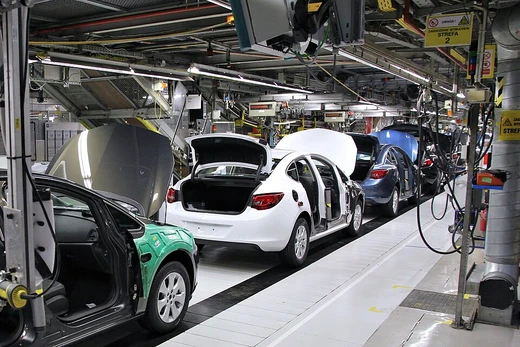
Citroën
French automaker known for innovative mass-production technologies.

Acabashi · CC BY-SA 4.0
The company is known for pioneering mass-production technologies such as front-wheel drive, unibody construction, and hydropneumatic suspension, and has been part of Stellantis since 2021.
- founder
- André Citroën
- field
- Automobile manufacturing
- nationality
- French
- known_for
- Traction Avant (first mass-produced front-wheel-drive car), hydropneumatic suspension, DS with disc brakes
Lore & Background
Citroën briefly negotiated a sale to General Motors, but the deal fell through.
Reader's Guide
Citroën's significance lies in its consistent introduction of advanced engineering to mass-market automobiles. The Traction Avant set a new standard with its front-wheel drive and unitary body, features that became industry norms. The DS further revolutionized comfort and safety with hydropneumatic suspension and disc brakes. These innovations earned Citroën three European Car of the Year awards. The brand's use of the Eiffel Tower as an advertising sign and its sponsorship of cross-continental expeditions demonstrated its marketing boldness. Its legacy endures in the design principles of modern cars.
Did You Know?
- Citroën used the Eiffel Tower as the world's largest advertising sign, as recorded in Guinness World Records.
- The Traction Avant was the first mass-produced car with front-wheel drive, four-wheel independent suspension, and unibody construction.
- Citroën produced half-track vehicles using the Kégresse track system, which were later adapted by the U.S. Army for the M2 and M3 Half-tracks.
From Gears to Automobiles – The Founding Story
André Citroën graduated from the École Polytechnique in 1900. A trip to Poland, his mother's homeland, taken shortly after her death proved serendipitous: he watched a carpenter shape a set of gears with a fishbone pattern that ran quieter and more efficiently than conventional designs. He purchased the patent for very little money, and by 1901 he and his partners had staked a large share of his inheritance into Citroën, Hinstin et Cie, a gear-manufacturing outfit that started with roughly ten workers. After a productive six-year stint with Mors and wartime armaments production, Citroën foresaw that his modern factory would need a peacetime product. By 1916 he was already commissioning designs, and in early 1917 he gave engineer Jules Salomon a blunt brief: build a 10-horsepower car that was better equipped, tougher, and cheaper to manufacture than anything on the market. The Type A rolled out of the Quai de Javel plant in late May 1919, and by July the first customer had taken delivery. Production reached 30 cars a day that year, and the brand was born.
Engineering That Redefined the Automobile
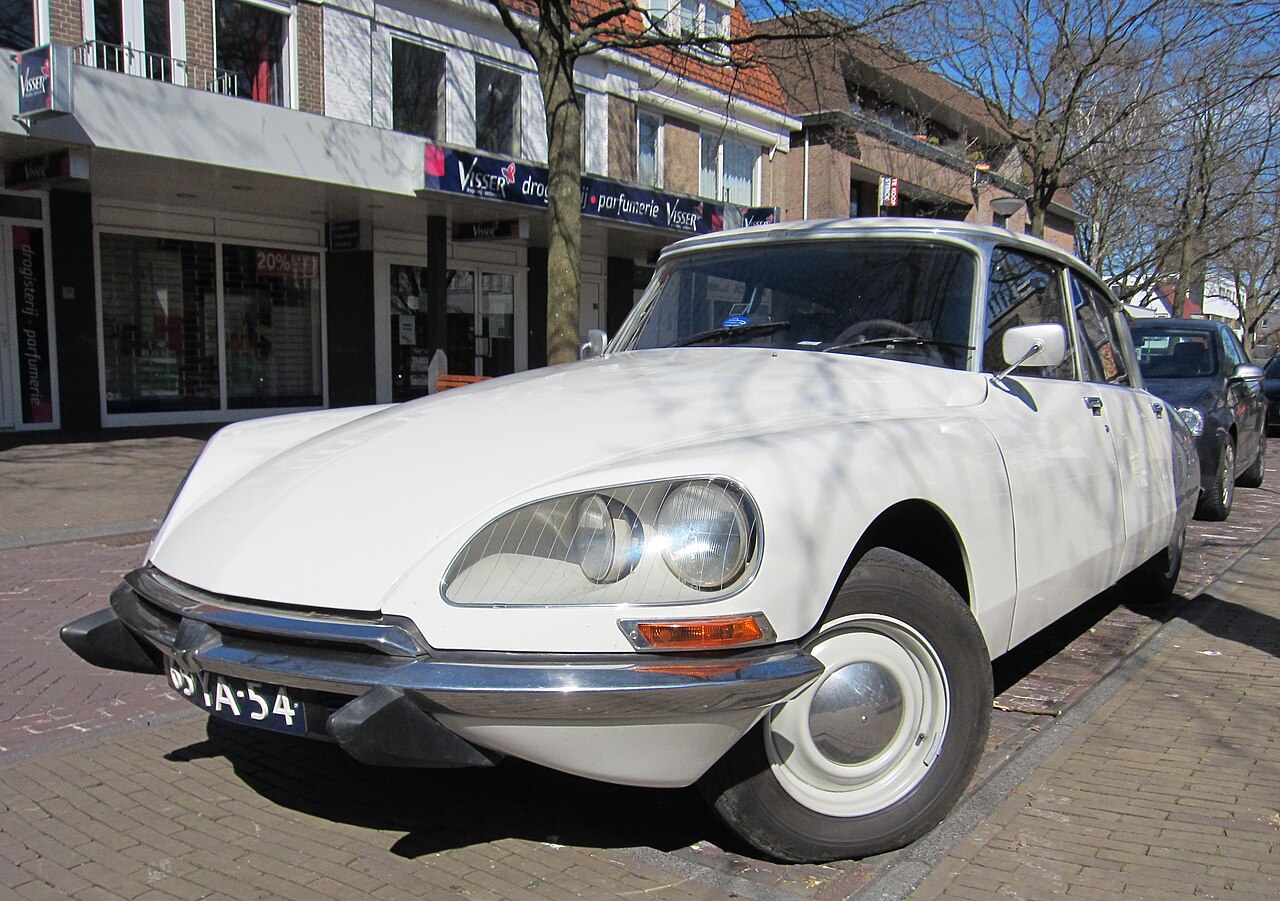
Citroën's name became synonymous with mechanical firsts that reshaped the driving experience. The 1934 Traction Avant was the world's first mass-produced car to combine front-wheel drive, four-wheel independent suspension, and unibody construction—there was no separate chassis; the body itself served as the main load-bearing structure. A decade later, in 1954, the marque introduced the first hydropneumatic self-levelling suspension system in the world, and the following year the legendary DS became the first mass-produced car to ship with modern disc brakes. In 1967, swiveling headlights were introduced on several models, giving drivers noticeably better visibility on winding roads. These innovations were not merely technical curiosities; they earned Citroën three European Car of the Year titles along with various national and international awards. The brand proved that radical engineering, when paired with mass-production thinking, could fundamentally reshape what drivers expected from an everyday car.
Expeditions, Half-Tracks, and Global Ambition
Beyond the showroom, Citroën became a vehicle for exploration and military utility. André Citroën sponsored the Croisière Jaune across Asia, the Croisière Blanche through North America, and the Croisière Noire across Africa, all relying on the Kégresse half-track system to cross terrain that wheeled vehicles could not manage. Scientists and journalists rode along, and the expeditions became international spectacles. The U.S. Army evaluated several Citroën-Kégresse vehicles in the 1920s, subsequently licensed the design, and eventually produced over 41,000 half-track cars in more than 70 variants between 1940 and 1944. After the 1940 occupation of France, German forces captured many of these vehicles and armored them for their own campaigns. In a separate feat of endurance, a 1923 Citroën 5CV Type C Torpedo that had already logged 48,000 km became the first car to complete a round trip around Australia, driven by Neville Westwood from Perth between August and December 1925. The fully restored vehicle now sits in the National Museum of Australia.
Corporate Tides and Enduring Identity
Citroën's corporate life has been shaped as much by ownership changes as by engineering breakthroughs. As early as 1920, André Citroën briefly negotiated a sale of the entire company to General Motors; the deal nearly closed, but GM's management concluded that absorbing Citroën would overstretch its capital and management capacity, and the brand remained independent until 1935. The next major shift came in 1976, when Peugeot acquired an 89.95% stake, giving rise to PSA Peugeot Citroën, later known simply as PSA Group. The most recent transformation arrived in 2021, when Citroën entered the Stellantis umbrella. Its head office relocated to the Stellantis Poissy Plant in Saint-Ouen-sur-Seine, while research and development operations are spread across Vélizy-Villacoublay, Poissy, Carrières-sous-Poissy, and Sochaux-Montbéliard. Yet one constant has survived every merger and rebranding: the C42 showroom on the Champs-Élysées, originally borrowed in 1919 from Alda car dealer Fernand Charron, still hosts exhibitions and concept-car reveals to this day.
Gallery
Frequently Asked Questions
Who owns Citroën today?
Since the 2021 formation of Stellantis, Citroën has operated as one of its French-based brands alongside Peugeot, Opel, and others. The company remains headquartered in France and continues to develop vehicles under the Stellantis group.
More in Automotive Industry 1-22
Spotted an error? Know more?
This is a living reference — every entry is fact-audited, and reader corrections feed straight into our audit queue. Suggest an edit · See this site's audit record