Transport
Transport moves people, animals, and goods between locations.

AyFortune · CC BY-SA 4.0
Transport (in British English) or transportation (in American English) is the intentional movement of humans, animals, and goods from one location to another. It encompasses modes including air, land (rail and road), water, cable, pipelines, and space, and is divided into infrastructure, vehicles, and operations. Transport enables human trade, which is essential for the development of civilizations.
- field
- Transportation
- modes
- Air, land (rail and road), water, cable, pipelines, space
- infrastructure
- Fixed installations including roads, railways, airways, waterways, canals, pipelines, and terminals
- means
- Vehicles, riding animals, pack animals
- key_concept
- Mobility concerns availability, information, usability, accessibility, and affordability
Lore & Background
Transport modes include air, water, and land transport, with rails or railways, road and off-road transport, as well as pipelines, cable transport, and space transport. Human-powered and animal-powered transport are sometimes regarded as distinct modes. Each mode has its own infrastructure, vehicles, transport operators, and operations. Governments regulate vehicle operation, including financing, legalities, and policies; operations and ownership can be public, private, or a partnership.
Reader's Guide
Transport is fundamental to economic growth and globalization, enabling trade and linking communities. Passenger transport may be public or private, while freight transport has focused on containerization, though bulk transport is used for large volumes of durable items. Machine-propelled forms cause air pollution and use large amounts of land, and are heavily subsidized by governments. Good planning of transport is essential to make traffic flow and restrain urban sprawl. The field includes diverse modes such as human-powered transport, animal-powered transport, air transport (including fixed-wing aircraft, helicopters, and aerostats), and land transport (rail and road). Each mode has advantages and disadvantages chosen based on cost, capability, and route.
Did You Know?
- Human-powered transport includes walking, running, swimming, and using vehicles like bicycles, inline skates, and wheelchairs.
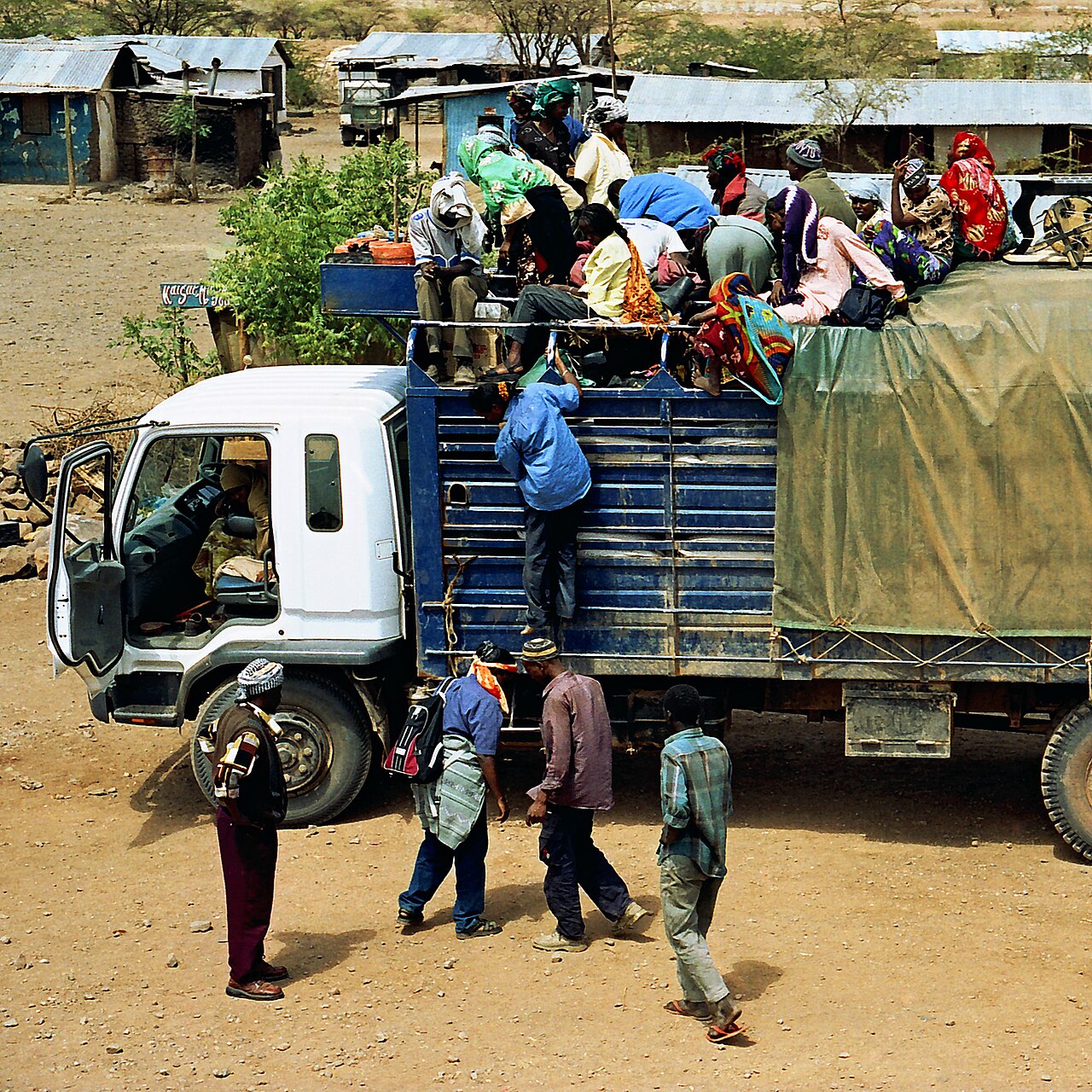
- Animal-powered transport uses working animals directly ridden, as pack animals, or harnessed to pull sleds or wheeled vehicles.
- The Intergovernmental Panel on Climate Change estimates a commercial jet's flight has 2-4 times the effect on climate than the same CO2 emissions at ground level.
Regulatory Architecture and Governance
India's vehicle safety framework operates through a layered governance structure anchored by the Ministry of Road Transport and Highways, which serves as the central authority for the automotive sector. The foundational legal instruments are the Motor Vehicles Act of 1988 and the Central Motor Vehicles Rules of 1989, the latter drawing its safety prescriptions from UN and European regulations that carry international recognition. Day-to-day enforcement of these provisions falls to individual State Governments and Union Territories rather than a single national body. At the technical advisory level, the CMVR Technical Standing Committee brings together a broad coalition: representatives from the Ministry of Heavy Industries, the Bureau of Indian Standards, several testing institutions, industry associations including SIAM, ACMA, and TMA, and State Transport Departments. A dedicated sub-committee, the Automotive Industry Standards Committee, handles the drafting of new safety standards and recommends amendments to existing ones. Its proposals travel upward to the CMVR-TSC, which either approves them or returns them for revision before forwarding the final package to MoRT&H for incorporation into the CMVR. The finished standards are published by the Automotive Research Association of India on behalf of the AISC.
Prototype Testing and Certification
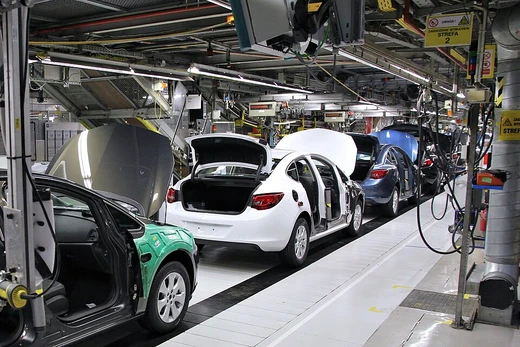
Under Rule 126 of the Central Motor Vehicles Rules, a network of designated test agencies is empowered to verify that every new vehicle model meets prescribed safety and emission standards before market release. The process is straightforward in principle: a manufacturer must submit a prototype of the intended vehicle to one of the recognised testing bodies. That body then conducts a full compliance evaluation against all applicable AIS standards and emission norms set by the Ministry. Only upon successful completion of this assessment does the agency issue a formal certificate to the manufacturer, clearing the model for production. Six institutions hold this certification mandate across the country. They include the Automotive Research Association of India in Pune, the Vehicle Research and Development Establishment in Ahmednagar, the Central Farm Machinery Testing and Training Institute in Budhni, the Indian Institute of Petroleum in Dehradun, the Central Institute of Road Transport also in Pune, and the International Centre for Automotive Technology in Manesar. This geographic spread allows manufacturers to select a testing site suited to their logistics, yet the standards applied remain uniform nationwide. The system effectively makes third-party laboratory verification a mandatory gate between engineering design and consumer availability.
Breadth of Technical Standards
The catalogue of Automotive Industry Standards reveals a regulatory scope that extends well beyond basic crashworthiness. On the collision front, AIS-098 prescribes offset frontal crash requirements while AIS-99 addresses side impacts using a mobile deformable barrier, reflecting the evolution toward more realistic crash scenarios. Pedestrian protection, governed by AIS-100, acknowledges that vehicles are not sealed objects but participants in shared road space where vulnerable road users must be considered in design. The standards also track the rapid electrification of Indian motoring. AIS 038, in its second revision, sets specific requirements for the electric power train of M-category and N-category motor vehicles, while AIS 156 goes further by covering individual electric powertrain components—batteries, motors, and control systems—each with its own safety and performance criteria. Beyond mechanical and electrical safety, AIS-140 introduces NavIC-based vehicle tracking systems, tying India's indigenous satellite navigation constellation into the regulatory fabric of the automotive sector. Together, these standards illustrate a framework that adapts to shifting technology, from internal combustion to electric drivetrains and from passive crash structures to active tracking and pedestrian-aware design.
Enforcement Gaps and Structural Criticism
Despite the existence of a comprehensive standards framework, the AIS system has drawn sustained criticism for its failure to translate written norms into real-world occupant safety. Vehicles sold in India have frequently been found not to meet expected safety benchmarks, a gap starkly illustrated when several of the country's best-selling cars were subjected to crash testing in Germany long after their Indian market launch. The human cost is measurable: road-accident fatalities in India run approximately three to four times higher than in European nations such as France, Germany, and Spain. Compounding the problem, although seatbelt use is legally mandatory, enforcement is so weak that only about 27 percent of drivers actually comply, amplifying the severity of every collision. A deeper structural critique targets the governance model itself. Observers have pointed out that the bodies responsible for formulating vehicle safety norms operate under the influence of the very automotive manufacturers they are meant to regulate. Rather than a single, independent central authority overseeing the entire process, the system is fragmented across multiple ministries and committees, diluting accountability and making it difficult for any one entity to be held responsible for the safety outcomes on Indian roads.
Gallery

Frequently Asked Questions
What is Transport in Automotive Industry 1-22?
Transport refers to the deliberate movement of people, animals, and goods from one place to another. It is the foundational concept that ties together every mode of conveyance within the industry framework.
What modes does Transport encompass?
The canon lists six primary modes: air, land (split into rail and road), water, cable, pipelines, and space. Together they cover virtually every way a human or cargo can be relocated.
How is Transport structured into components?
It is divided into three pillars: infrastructure (fixed installations like roads, railways, airways, waterways, canals, pipelines, and terminals), vehicles or means of conveyance, and the operations that link them. This tripartite breakdown is the standard way the encyclopedia organizes the topic.
Why is Transport considered so central to civilization?
Transport is what makes human trade possible, and trade is the engine behind the growth of every major civilization. Without the ability to move goods and people, the interconnected economies the industry serves would not exist.
What does 'mobility' mean within Transport's key concepts?
Mobility is defined by five criteria: availability, information, usability, accessibility, and affordability. A transport system is only considered truly functional when all five of these factors are addressed for its users.
More in Automotive Industry 1-22
Spotted an error? Know more?
This is a living reference — every entry is fact-audited, and reader corrections feed straight into our audit queue. Suggest an edit · See this site's audit record